
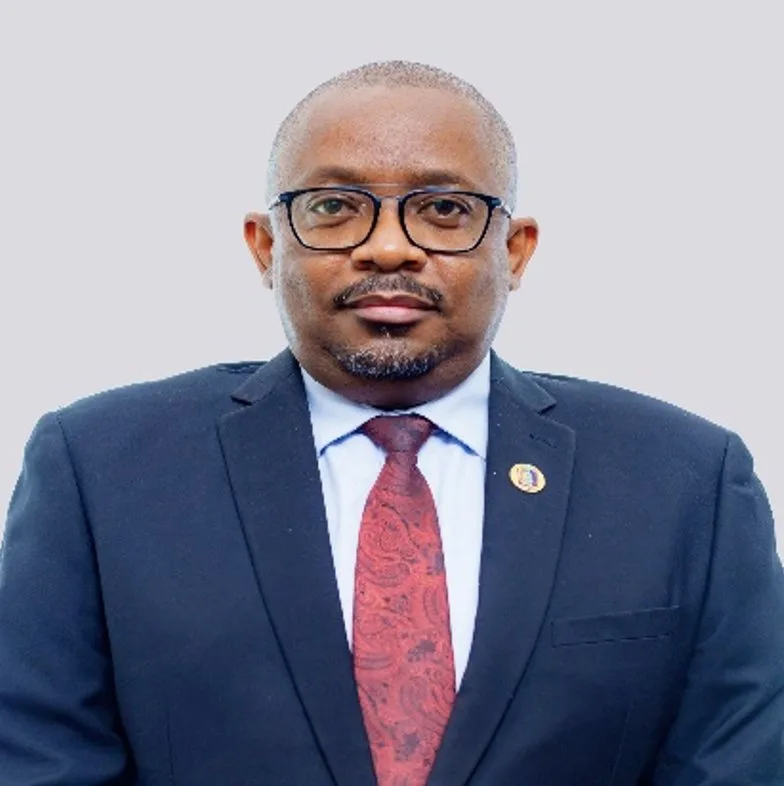
Charles Domminick Kihampa is a distinguished academic and leader in higher education quality assurance. Currently, he is the Executive Secretary for the Tanzania Commission for Universities (TCU) since January 2018. In March 2024, he was elected as the President of the African Quality Assurance Network (AfriQAN), underscoring his expertise and influence in advancing educational standards across Africa. Additionally, he is the Chairman of the Quality Assurance Committee of the Inter-University Council for East Africa (IUCEA). In 2020, he served as the Chairman of the Technical Committee for Certification and Accreditation of Southern African Development Community (SADC).
Charles D. Kihampa holds multiple key leadership roles, including Chairman of the Tanzania Chemical Society (TCS), Board Member of the Tanzania Commission for Science and Technology (COSTECH), and a member of the Board of Directors of the Mwalimu Nyerere Memorial Scholarships at the Bank of Tanzania. These positions highlight his broad contribution to education, research, and science in Tanzania and beyond.
He has extensive experience in quality assurance (QA) in higher education, particularly through his leadership roles and contribution to academic and institutional development. He has played a pivotal role in policy formulation and implementation aimed at upholding and improving academic standards, that include institutional quality audits and program accreditation processes, ensuring compliance with both national and international benchmarks, development and review of accreditation standards, and the creation of quality assurance frameworks to guide Tanzanian universities.
Before joining TCU in January 2018, Charles D. Kihampa worked with Ardhi University (ARU) in Tanzania as an Associate Professor in the School of Environmental Science and Technology, where he also held different administrative posts as the Dean at the School of Environmental Science and Technology, and Director of Undergraduate Programs in which he also led the Secretariat of the University Senate, demonstrating his commitment to academic governance and excellence.
Throughout his academic career, Charles D. Kihampa has made significant contributions to education and research, training and supervising more than 20 master’s and PhD students. His participation and presentations at various national and international forums on quality assurance in higher education underscore his dedication to fostering academic excellence and continuous improvement.
Abstract
Abstract Title
The Contribution of National Higher Education Regulatory
Bodies to Transforming Education Systems
The transformation of education systems in Africa is a critical policy imperative shaped by demographic growth, labour market demands, technological advances, and the pressures of global competitiveness. National higher education regulatory bodies serve as key enablers in this process by providing oversight, safeguarding quality, and ensuring that higher education remains aligned with national development priorities while responsive to global trends. Their mandates typically include registering higher education institutions, accrediting programmes, regulating enrolments, and guiding quality assurance across teaching, research, and community engagement. These responsibilities ensure that expansion in higher education is matched by relevance, quality, and accountability.
The Tanzania Commission for Universities (TCU) exemplifies this enabling role through the development of regulatory frameworks that provide guidance on institutional establishment, academic diversification, and the integration of innovation and digital learning within curricula. It also champions equity in access, with attention to gender inclusion and opportunities for underrepresented groups. Beyond national context, TCU actively engages in regional and continental initiatives that promote harmonisation of standards, academic mobility, and collaborative research. This experience highlights the enabling influence of regulatory bodies in balancing expansion with quality assurance while fostering innovation, thereby positioning higher education as a central driver of sustainable transformation in Africa.