
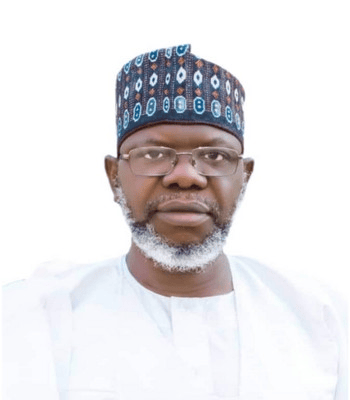
Salisu Shehu is the Executive Secretary of the Nigerian Educational Research and Development Council (NERDC). He was born 1966 in Tafawa Balewa, Bauchi State, Nigeria. He is a Professor of Educational Psychology in the Department of Education, Bayero University, Kano (BUK). He holds a BA in Education, a M.Ed. in Educational Psychology from BUK, and a PhD in Educational Psychology from Usman Danfodio University, Sokoto.
He began his career as a teacher at Federal College of Education (Tech.), Gombe between 1990 and 1994, before joining the services of BUK in 1994, where he made significant contributions as the pioneer Director of the Institute of Continuing Education (ICE), pioneer Dean of the School of Continuing Education, and Director of the Centre of Islamic Civilisation and Interfaith Dialogue.
Professional Roles and Leadership
Salisu Shehu was a Special Advisor to the Bauchi State Governor on Education and Societal Re-Orientation from 2007 to 2011, former Chairman of the Governing Board of Al-Ansar Centre for Comprehensive Education in Abuja, former Vice-Chancellor at Al-Istiqama University, Sumaila, former National Coordinator at the International Institute of Islamic Thought, Nigeria Office, and former Commissioner at Kaduna State Judicial Commission of Inquiry into the Clash between the Army and the Islamic Movement of Nigeria (IMN).
Publications and Research
Salisu Shehu has authored a number of books. He has also presented papers at local, national, and international conferences and published in reputable local and International Journals. His areas of research interest include Educational Psychology, Islamic Psychology, Islamic Education, Critical Issues in Education, Teacher Education, Open and Distance Learning, Critical Social Theory, Peace Education and Conflict Resolution, Social Justice, Good Governance, and Fighting Corruption in Public Responsibility and the Private Sector.
Professional Memberships
Salisu Shehu is a member of various professional associations, including International Society for Teacher Education (ISTE), International Council on Distance Education (ICDE), Nigerian Society for Educational Psychologists (NISEP), Counselling Association of Nigeria (CASSON), Nigerian Academy of Education (NAE), and Association of Child Learning Psychologists (ACLP).
Current Responsibilities
In addition to his role as the Executive Secretary of NERDC, Professor Salisu Shehu currently serves as the Deputy Secretary General at the Nigerian Supreme Council for Islamic Affairs, Executive Secretary at the Islamic Forum of Nigeria, Special Adviser to the President and Founder of Al-Ansar Foundation, Dr. Muhammad Kyari Dikwa on Education, Member of the Kano State Shura Council, and Member of the Nigerian/ECOWAS Ulama Mediation Committee between ECOWAS, and the Nigerien Military Administrators.
Abstract
Abstract Title
Educational Reforms in Nigeria and NERDC’s Role as a National Think-Tank.
Effective education service delivery for nation building is anchored on a properly designed system and structure. However, the functionality of such system depends on critical government institutions established to provide specialized services in identified subsectors of the system. In Nigeria, such institutions exist with clear roles, functions, and mandates, and are expected to drive reform process in the education sector for optimal performance. Towards improved functionality, the Nigeria education sector is witnessing tremendous reforms that focuses on six critical pillars. This presentation highlights the scope of the reform process in the Nigeria education sector. It gives insight on the mandate and functions of the Nigerian Educational Research and Development Council (NERDC) and its roles, as the think tank of Nigeria education, in the Nigeria education system reform process. The presentation further spotlights some key achievements of NERDC in the reform process. It concludes by presenting some recommendations for other African countries.